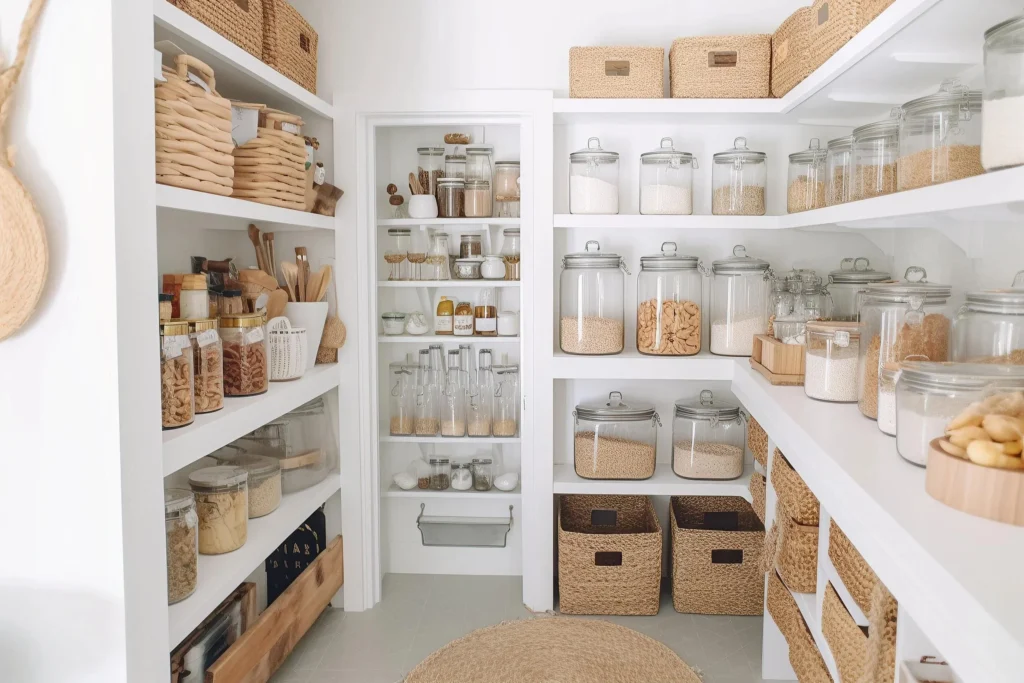
A cluttered pantry can make even a simple cooking task frustrating. You reach for a bag of rice and knock over a cereal box. A half-open packet of pasta disappears behind canned goods, while snacks seem to multiply on every shelf. Before long, finding what you need becomes harder than preparing the meal itself.
Short answer: start with clear airtight containers for dry goods and a Copco lazy Susan for oils and sauces. Those two fix most messy pantries. For deep shelves, add PAKETA pull-out organizers so nothing gets lost at the back, and use a Simple Houseware can rack so canned goods stay visible.
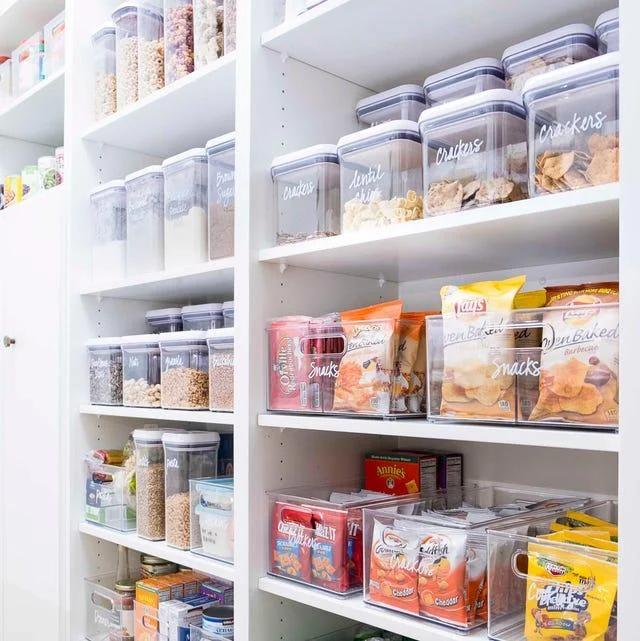
The good news? You don’t need a large walk-in pantry or an expensive kitchen makeover to get things under control. A few well-chosen storage solutions can make a noticeable difference.
The best pantry organizers help you use available space more effectively, keep everyday ingredients within reach, and make it easier to see what you already have. From clear storage bins and airtight food containers to lazy Susans and stackable shelves, there are plenty of practical options for different kitchen layouts.
In this guide, we’ll explore the best pantry organizers for a decluttered kitchen in 2026, explain what to look for before buying, and share simple organization tips that can help you maintain a tidy pantry.
Affiliate Disclosure: Lihan Home Finds participates in the Amazon Associates Program. As an Amazon Associate, we earn from qualifying purchases. This means we may receive a small commission when you purchase through qualifying links, at no additional cost to you.
In this guide
ToggleWhy Choosing the Right Pantry Organizers Matters
A well-organized pantry is about more than making shelves look attractive. It should make everyday kitchen tasks easier.
When food items are scattered across different shelves, it’s easy to forget what you own. You might buy another bag of flour when there’s already one sitting behind a collection of snack boxes.
The right kitchen pantry organizers help solve these everyday problems.
Here are a few reasons to consider investing in practical storage solutions:
Better visibility: Clear containers and open bins make it easier to identify ingredients without moving everything around.
More usable space: Stackable containers and shelf risers help you take advantage of vertical storage.
Easier meal preparation: Grouping similar ingredients makes finding what you need quicker.
Simpler grocery shopping: Seeing your remaining supplies can help prevent unnecessary purchases.
Less everyday clutter: Designated storage areas make it easier to put items back where they belong.
The trick is choosing organizers that match your pantry rather than buying a collection of attractive containers that don’t actually fit.
Best Pantry Organizers for a Decluttered Kitchen: Quick Comparison
Before exploring individual options, here’s a look at nine useful pantry organization products and what each one does best.
| Pantry organizer | Best for | Main benefit |
|---|---|---|
| Airtight food containers | Dry ingredients | Organized, sealed storage |
| Clear pantry bins | Snacks and packets | Better visibility |
| Lazy Susan turntables | Bottles and condiments | Easier access |
| Stackable can racks | Canned food | Saves shelf space |
| Expandable shelf risers | Small items and cans | Uses vertical space |
| Over-the-door organizers | Small pantries | Extra storage |
| Wire storage baskets | Packaged food | Easy categorization |
| Pull-out pantry drawers | Deep cabinets | Easier access |
| Pantry labels | Containers and baskets | Consistent organization |
Prices, dimensions, materials, and availability vary by product and retailer. Check current Amazon listings before purchasing.
9 Best Pantry Organizers Worth Considering in 2026
1. Airtight Food Storage Containers – Best for Dry Ingredients
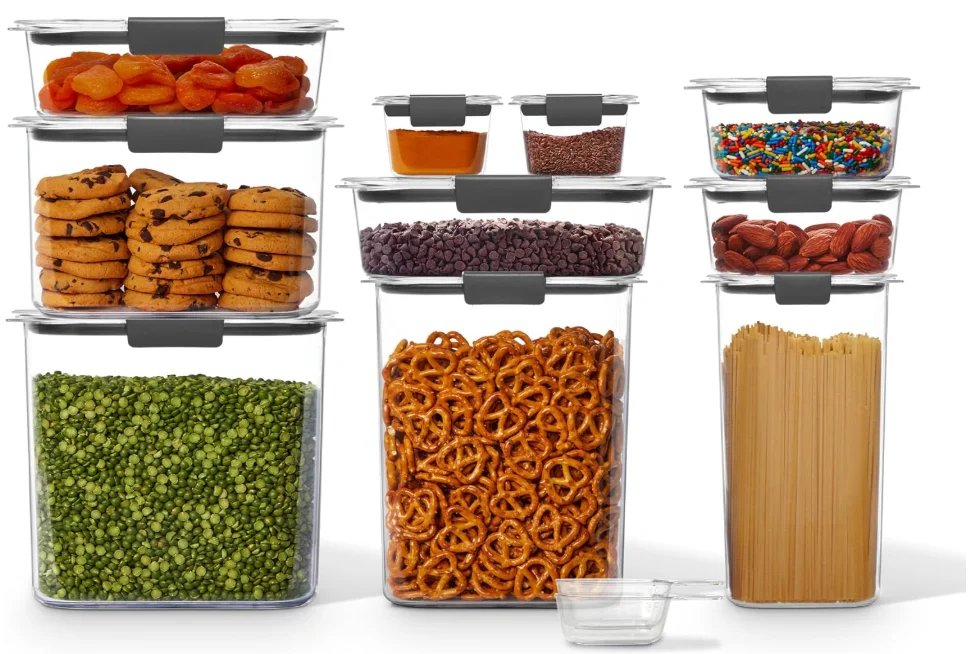
If flour, sugar, rice, pasta, and cereal are taking over your pantry, airtight food storage containers are a useful place to start.
Original packaging can be awkward to stack, especially when bags have been opened or cardboard boxes are partially empty. A set of clear, airtight containers creates a more consistent storage arrangement.
Look for containers with secure lids, easy-to-open designs, and wide openings that make filling and cleaning less frustrating.
Features to look for:
Secure airtight seals.
Clear, food-contact-safe materials.
Stackable shapes.
Different sizes for different ingredients.
Easy-to-clean lids and containers.
Benefits: They make dry ingredients easier to identify, help protect contents from moisture when properly sealed, and create a more organized appearance.
Potential drawback: A large container set can take up more room than expected. You’ll also need to wash and dry containers before refilling them.
Best for: Families, regular home cooks, and anyone who stores flour, cereal, pasta, or other dry ingredients in bulk.
Our recommendation: Start with containers for the ingredients you use most often rather than transferring every pantry item into a new jar.
2. ClearSpace Divided Pantry Storage Bins with Lids – Best for Snacks and Small Food Items
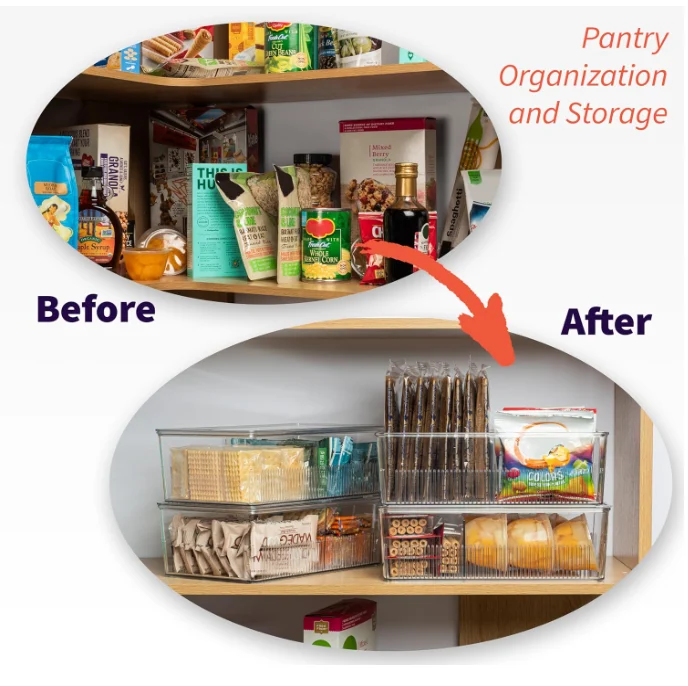
Keeping snack packets, seasoning sachets, and small kitchen essentials organized can be challenging, especially when pantry shelves have limited space. The ClearSpace Divided Storage Bins with Lids offer a practical way to keep these items separated, visible, and easy to access.
Designed for both pantry and refrigerator storage, these clear organizers feature built-in dividers that create separate compartments for sorting different food items. They’re particularly useful for individually packaged snacks, breakfast bars, small food packets, and other kitchen essentials that tend to get mixed together.
The included lids also allow the bins to be stacked, helping you make better use of available storage space.
Key Features:
Five divided sections: Built-in compartments help separate different snacks and small food items.
Stackable design: Lids allow multiple bins to be stacked for more efficient storage.
Clear construction: Transparent sides make it easier to identify contents without opening the container.
Durable material: Made from BPA-free, chlorine-free, shatter-resistant plastic.
Compact dimensions: Each bin measures 10.5 × 6 × 3.5 inches, making it suitable for many pantry shelves and kitchen cabinets.
Easy maintenance: The bins can be cleaned with mild soap and water.
Versatile storage: Suitable for organizing pantry items, refrigerator supplies, and selected household essentials.
Why We Recommend It:
One useful feature of these ClearSpace organizers is their divided interior. Instead of placing different snack packets together in one large container, you can give each category its own section. This makes it easier to keep individually packaged snacks, small food items, and kitchen essentials organized.
The stackable design is another advantage, particularly for kitchens where shelf space is limited. You can arrange multiple bins vertically instead of spreading everything across the pantry.
Their transparent construction also makes it easier to check what’s inside when planning grocery shopping or restocking your kitchen.
Potential Drawbacks:
The divided compartments are useful for smaller items but may not accommodate larger snack packages or bulky food products. Also, although the bins have lids, they should not be treated as airtight food-storage containers. Check the available space on your shelves before purchasing.
Best For: Families with children, households with individually packaged snacks, and anyone looking to organize small pantry or refrigerator items.
3. Copco Nonskid Lazy Susan Turntable Organizer (12-Inch) – Best for Condiments and Small Bottles
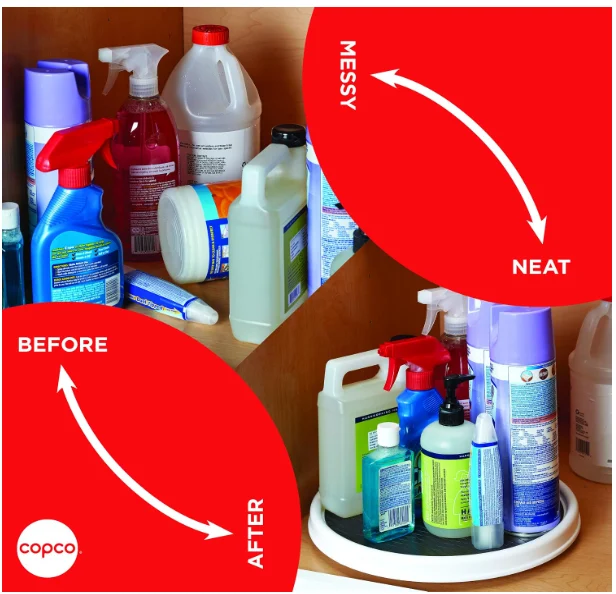
Finding a particular sauce, spice jar, or cooking ingredient can be frustrating when several bottles are crowded together on a pantry shelf. The Copco Nonskid Lazy Susan Turntable Organizer offers a simple way to make these items easier to reach without constantly moving everything around.
This 12-inch rotating organizer features a smooth-glide 360-degree design, allowing you to turn the tray and bring items from the back toward the front. Its white and gray finish gives it a clean appearance that fits comfortably into many kitchen storage spaces.
One particularly useful feature is the built-in nonskid liner, which helps keep bottles and jars stable while the turntable rotates. The raised outer rim also provides extra protection against items slipping off the edge.
Key Features:
12-inch diameter: A practical size for many pantry shelves, kitchen cabinets, and refrigerator spaces.
Smooth 360-degree rotation: Makes it easier to access items without reaching into the back of crowded shelves.
Built-in nonskid liner: Helps keep bottles, jars, and containers from sliding during rotation.
Raised protective rim: Helps prevent stored items from falling off the turntable.
Durable plastic construction: Lightweight and suitable for everyday household organization.
Easy to clean: The surface can be wiped clean for convenient maintenance.
Versatile storage: Suitable for organizing spices, sauces, condiments, canned goods, bathroom essentials, and other small household items.
Why We Recommend It:
The main advantage of the Copco Lazy Susan is its rotating design. Instead of reaching behind several bottles to find a particular condiment, you can simply turn the organizer until the item is within easy reach.
It’s especially useful for storing frequently used cooking oils, sauce bottles, spice jars, and small containers. The nonskid liner and raised rim are practical details that help keep items more secure while the tray moves.
Another benefit is its versatility. Although it’s designed with kitchen organization in mind, you can also use it in a bathroom cabinet, laundry room, or home office to keep smaller essentials together.
Potential Drawbacks:
The 12-inch round shape may leave some unused space in square or rectangular cabinets. It also needs sufficient clearance to rotate freely. Although the nonskid liner helps stabilize items, it’s still important to avoid overcrowding the tray with heavy or oversized containers.
Best For: Home cooks, households with several condiments and spice jars, and anyone looking to improve access to items stored on deep pantry shelves.
4. Simple Houseware 3-Tier Stackable Can Organizer Rack – Best for Canned Goods
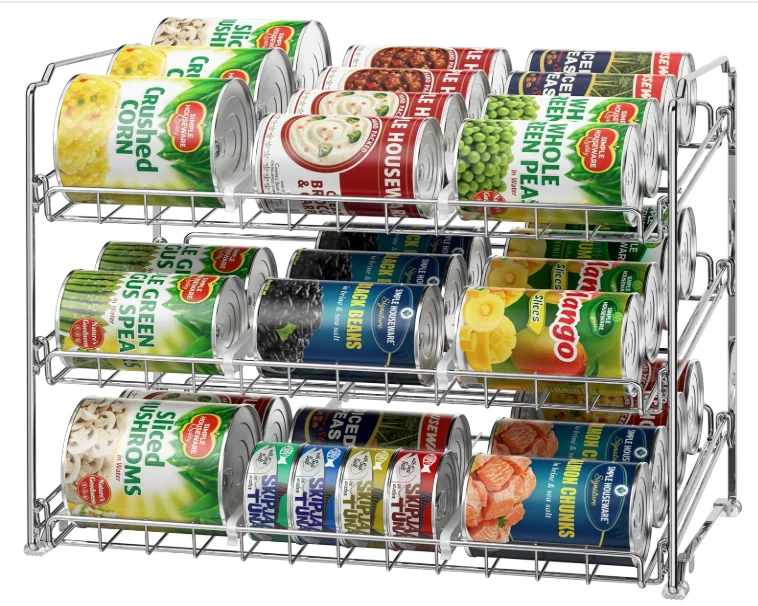
Keeping canned vegetables, soups, beans, and other pantry staples organized can be difficult when they’re stacked on top of one another. Cans placed at the back of a shelf are easy to overlook, and finding the right one often means moving several others out of the way.
The Simple Houseware 3-Tier Stackable Can Organizer Rack offers a more practical way to store canned goods. Designed with three angled metal shelves, it allows cans to roll forward as you remove the front ones. This makes it easier to access your supplies and follow a first-in, first-out storage routine.
With a stated capacity of up to 36 cans, this freestanding organizer is particularly useful for households that regularly buy groceries in bulk.
Key Features:
Three-tier storage design: Provides three levels of storage for organizing canned food, soda cans, and mason jars.
36-can capacity: Offers space for up to 36 cans, depending on their dimensions.
Rolling shelf system: Angled shelves help cans move forward as items are removed.
Six adjustable dividers: Movable plastic dividers allow you to organize different can and jar sizes.
Stackable construction: Plastic clips help secure additional racks when you need more storage.
Durable metal frame: Chrome-coated metal construction provides a sturdy storage structure.
Anti-slip rubber feet: Help keep the organizer stable during everyday use.
Easy assembly: Designed for quick setup without additional hardware.
Product Dimensions: 11.5 inches deep × 17 inches wide × 13.75 inches high.
Why We Recommend It:
One of the most useful features of this Simple Houseware organizer is its angled shelf design. When you remove a can from the front, another can can roll forward, making it easier to see what’s available. This is especially helpful when your pantry contains several varieties of canned food.
The six adjustable dividers also provide flexibility. You can arrange the sections to accommodate different can sizes instead of trying to fit everything into fixed compartments.
Another advantage is its stackable construction. If your canned food collection grows, you can add another compatible rack to increase your storage capacity.
Important Size Consideration: This is a relatively large organizer. The manufacturer recommends allowing at least 12 inches of depth, 17.5 inches of width, and 16 inches of height for a comfortable fit. Measure your pantry or cabinet before ordering.
Potential Drawbacks:
Its larger footprint may not suit small or narrow pantry shelves. The 36-can capacity also depends on the dimensions of the cans being stored. Some unusually shaped containers may not fit properly in the angled tracks.
Best For: Families, bulk grocery shoppers, and households that regularly store canned vegetables, soups, beans, and other canned products.
5. Expandable Shelf Risers – Best for Maximizing Vertical Space
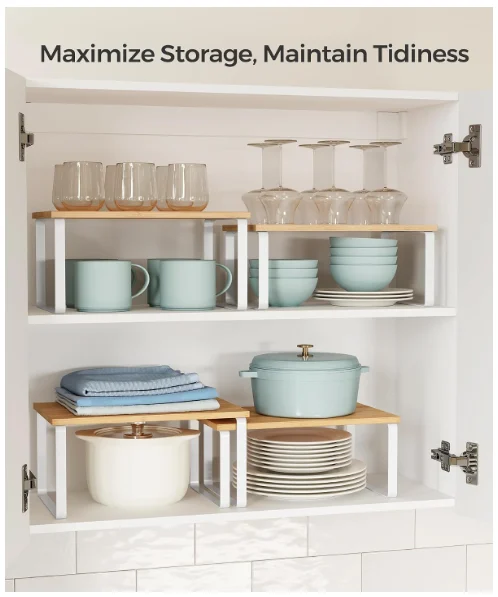
Pantry shelves often have unused space above shorter items. This is especially noticeable when storing spice jars, small cans, and condiment bottles.
Expandable shelf risers help make that space useful by creating an additional level.
Instead of hiding smaller products behind taller containers, you can arrange them on different heights.
Features to look for:
Adjustable width.
Stable legs or supports.
Easy assembly.
A weight capacity suitable for your intended items.
A shelf-friendly design.
Benefits: Risers improve visibility and can make small pantry items easier to reach.
Potential drawback: Not every riser is suitable for heavy appliances or large food containers. Check the manufacturer’s weight limits.
Best for: Small kitchens, narrow pantry shelves, and cabinets with generous vertical clearance.
Our recommendation: Use expandable risers for spices, small jars, and canned goods rather than oversized packages.
6. Over-the-Door Pantry Organizers – Best for Small Kitchens
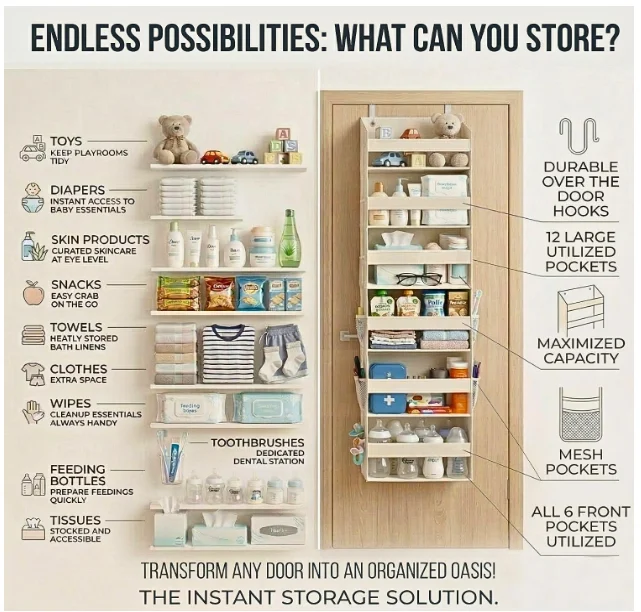
When cabinet shelves are already full, the inside of a pantry door can provide additional storage space.
Over-the-door organizers typically feature several baskets or adjustable shelves that hold smaller household and kitchen items.
They’re particularly helpful for spice packets, lightweight snacks, seasoning bottles, and other frequently used supplies.
Features to look for:
Adjustable basket heights.
Strong mounting hardware.
Suitable door thickness compatibility.
Adequate clearance behind the door.
Weight limits appropriate for your items.
Benefits: You can create additional storage without installing another cabinet or shelving unit.
Potential drawback: Not every pantry door can support these organizers. The baskets may also interfere with existing shelves if there isn’t enough clearance.
Best for: Apartment kitchens, compact pantries, and households with limited cabinet space.
Our recommendation: Measure the door and check its clearance before ordering. Don’t assume every over-the-door rack will fit.
7. Wire Storage Baskets – Best for Packaged Foods
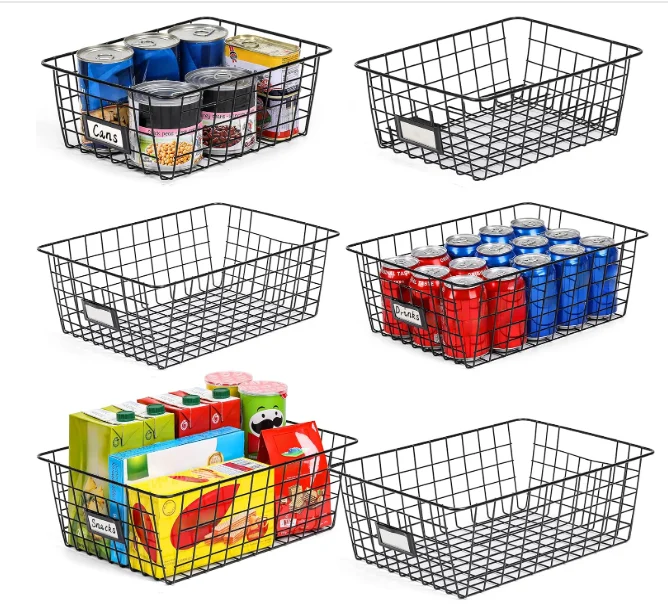
Not everything needs to be transferred into a storage container.
Some pantry items are easier to keep in their original packaging, particularly crackers, pasta boxes, baking mixes, and unopened food packets.
Wire baskets provide a convenient way to group these products without hiding them completely.
They also work well for separating different categories of food.
Features to look for:
Strong metal construction.
Smooth edges.
Comfortable handles.
Suitable basket depth.
Stackable designs, if needed.
Benefits: Wire baskets are versatile, easy to rearrange, and useful for keeping loose packages together.
Potential drawback: Small packets can slip through widely spaced wire openings. Some metal finishes may also require careful cleaning to prevent rust.
Best for: Packaged food, extra grocery supplies, and larger pantry shelves.
Our recommendation: Use one basket for each category, such as baking supplies, breakfast products, or unopened snacks.
8. PAKETA Expandable Pull-Out Cabinet Organizer (4-Pack) – Best for Deep Cabinets
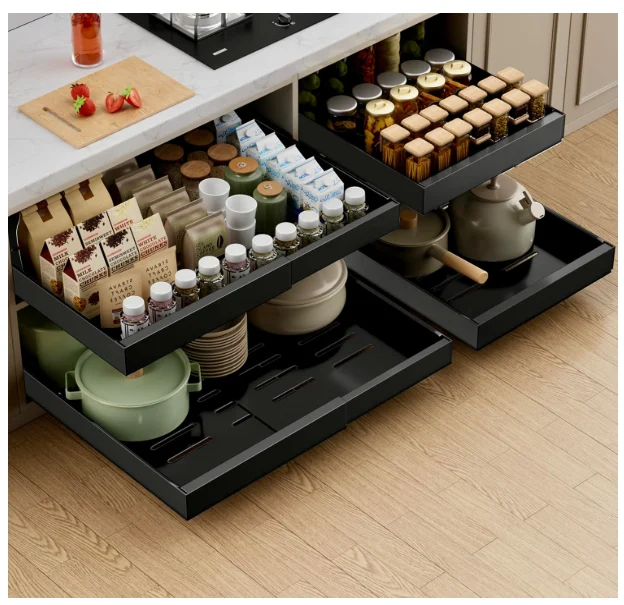
Deep kitchen cabinets often hide items at the back, making it difficult to find spices, canned goods, and everyday cooking essentials. The PAKETA Expandable Pull-Out Cabinet Organizer offers a convenient solution by allowing you to slide stored items forward instead of reaching into crowded shelves.
This four-pack organizer features an adjustable width of 12 to 20 inches, making it suitable for different cabinet sizes. Its thickened carbon steel construction and upgraded three-rail sliding system are designed to provide stability and smooth movement.
Key Features:
Adjustable width: Expands from 12 to 20 inches to fit compatible cabinets.
Durable construction: Made from thickened carbon steel with a black finish.
Smooth sliding system: Upgraded three-rail design for easier access.
Heavy-duty capacity: Advertised to support up to 65 lbs per organizer.
Flexible installation: Includes nano adhesive and screws for mounting options.
Four-piece set: Provides multiple storage solutions for different cabinets.
Product Dimensions: 21 inches deep × 3 inches high, with an adjustable width of 12–20 inches.
Why We Recommend It:
The adjustable design makes this organizer useful for kitchens with different cabinet widths. You can use it to store spices, canned goods, pots, pans, and other kitchen essentials. Its sliding mechanism also makes items at the back easier to reach.
Potential Drawbacks: Cabinet compatibility is important. The manufacturer recommends an interior width exceeding 13 inches and a depth exceeding 21 inches. Check the frame and hinge clearance before purchasing. Installation may also require careful positioning.
Best For: Homeowners with deep kitchen cabinets, crowded pantry shelves, and anyone looking to improve access to frequently used kitchen supplies.
9. SAVVY & SORTED Reusable Chalkboard Pantry Labels – Best for Customizable Organization
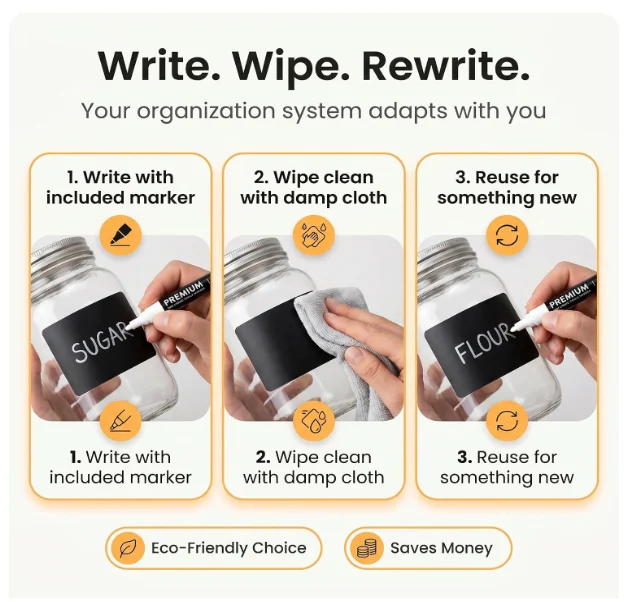
Give your pantry a neat, coordinated look with these reusable chalkboard labels from SAVVY & SORTED. The black matte stickers provide space to write ingredient names, while the included white chalk marker makes labeling simple.
With 200 rectangular labels in each roll, you can organize food jars, storage containers, baskets, and other household essentials.
Key features:
200 black vinyl chalkboard labels.
2.75 x 1.75-inch rectangular design.
Includes a 3mm fine-tip white chalk marker.
Wipes clean with a wet towel for reuse.
Removable and repositionable adhesive.
Suitable for kitchens, laundry rooms, bathrooms, offices, and garages.
Why we recommend it: You can easily update labels when container contents change, making these stickers a practical choice for flexible pantry organization.
Potential drawback: The chalk writing needs to be wiped clean before reusing the labels, and the rectangular size may not suit very small containers.
Best for: Anyone who wants reusable, customizable labels for pantry jars, food containers, and storage bins.
Best Pantry Organizers for Small Kitchens
Small kitchens require a slightly different approach to organization.
You may not have enough room for a large collection of containers, baskets, and racks. Instead, focus on products that solve specific storage problems without making shelves feel crowded.
Here are some practical pantry organization ideas for small spaces:
1. Use stackable containers
Choose rectangular containers with flat lids. They can help you make better use of limited shelf space.
2. Add an expandable shelf riser
A riser creates another level for spices, cans, or small jars without requiring a larger cabinet.
3. Make use of pantry doors
An over-the-door rack can provide extra storage for lightweight products when the door and surrounding shelves allow it.
4. Group snacks in compact bins
Small, clearly defined bins prevent packets from spreading across multiple shelves.
5. Avoid unnecessary organizers
A small kitchen doesn’t need ten different storage systems. Measure your space and buy only what solves an existing problem.
The best approach is to keep frequently used products accessible and reserve less convenient areas for occasional supplies.
Short on drawer and cabinet space too? Our guides to the best kitchen drawer organizers and best under-sink organizers cover the rest of a small kitchen.
Best Airtight Food Storage Containers: What Should You Look For?
Airtight food storage containers are among the most useful pantry organization products, especially if you regularly purchase dry ingredients.
However, not every container is suitable for every type of food.
Before purchasing a set, consider the following:
A reliable lid: Look for a lid that closes securely and has a suitable sealing mechanism.
The right capacity: A container should hold the amount you typically purchase without leaving excessive unused space.
Food-safe materials: Check the manufacturer’s information about the intended food-contact use.
Easy cleaning: Wide openings and removable lids can make washing and refilling more convenient.
Stackable construction: Square or rectangular containers can make better use of shelf space than collections of different-shaped jars.
For dry pantry staples, start with flour, rice, sugar, cereal, and pasta. These are often the ingredients that benefit most from consistent storage.
One important point: Always check whether containers and lids are dishwasher-safe before cleaning them that way. Also, transferring food into a container doesn’t replace proper food-storage practices or make an unsuitable container airtight.
Want specific picks? See our guide to the best food storage containers, compared side by side.
Best Pantry Organizers for Snacks and Canned Goods
Snacks and canned products can create two different types of pantry clutter.
Snack packages are often irregularly shaped, while cans are heavy and difficult to stack securely.
For snacks, clear storage bins and wire baskets are usually practical options. You can separate breakfast bars, chips, crackers, and individual snack packets.
For canned goods, consider tiered shelf risers or dedicated can racks.
A simple arrangement might look like this:
Top shelf: Extra supplies and occasional-use ingredients.
Eye-level shelf: Everyday snacks and breakfast foods.
Middle shelf: Canned vegetables, beans, and sauces.
Lower shelf: Heavier packages and bulk food supplies.
Pantry door: Lightweight packets and frequently used small items.
Adjust the arrangement according to your household’s needs and the pantry’s available space.
If spices are taking over your shelves, our spice rack organizer guide compares risers, drawer inserts and pull-outs.
How to Organize Your Pantry Step by Step
Buying new organizers is only part of the process. A practical storage system starts with understanding what you already have.
Follow these steps to create a pantry that’s easier to maintain.
Step 1: Empty the Pantry
Remove everything from the shelves. This gives you a clear view of the available space and makes it easier to clean.
Step 2: Check Expiration Dates
Go through your food supplies and separate expired products from items you still use.
Set aside unopened, suitable products for donation if you don’t plan to use them and local donation rules allow it.
Step 3: Group Similar Products
Create categories that make sense for your household.
For example:
Breakfast foods.
Baking ingredients.
Snacks.
Canned goods.
Pasta and rice.
Cooking essentials.
Extra supplies.
This makes it easier to decide which organizers you actually need.
Step 4: Measure Your Shelves
Before shopping, measure the interior width, depth, and height of each shelf.
Remember to account for door hinges, shelf lips, and clearance above stacked containers.
This simple step can prevent the frustration of ordering organizers that don’t fit.
Step 5: Choose the Right Storage Products
Match each organizer to a particular problem.
Use airtight containers for suitable dry ingredients, bins for loose packages, turntables for bottles, and risers for products that are difficult to see.
You don’t need every product category in this guide.
Step 6: Create Pantry Zones
Give each food category a designated location.
Keep frequently used items within easy reach and place heavier products on lower shelves where practical.
Step 7: Label Where Necessary
Use simple labels to identify containers and storage categories.
Avoid making the system overly complicated. The goal is to make the pantry easier to use, not create extra work.
Step 8: Maintain Your Organization
When grocery shopping, check what you already have before buying more.
During restocking, move older products toward the front and place newer items behind them.
A quick weekly check can help prevent clutter from returning.
Common Pantry Organization Mistakes to Avoid
Even attractive pantry setups can become inconvenient when the storage system doesn’t match everyday habits.
Watch out for these common mistakes:
Buying organizers before measuring: A beautiful set of bins won’t help if they don’t fit your shelves.
Purchasing too many containers: Not every food item needs to be transferred into a separate container. Keep suitable original packaging when it works well.
Ignoring accessibility: Frequently used products should not be hidden behind items you rarely touch.
Choosing appearance over functionality: Matching containers can look attractive, but easy access, suitable sizes, and simple cleaning matter more.
Overfilling shelves: Leave enough space to remove containers without knocking over nearby products.
Forgetting maintenance: An organization system needs to be practical enough for everyone in the household to follow.
The best pantry isn’t necessarily the one that looks perfect in a photograph. It’s the one that stays useful after several grocery trips.
Frequently Asked Questions About Pantry Organizers
1. What are the best pantry organizers for a small kitchen?
Clear storage bins, stackable food containers, expandable shelf risers, and over-the-door organizers are useful choices. Select products based on your shelf dimensions and the items you need to store.
2. Are airtight pantry containers worth buying?
They can be worthwhile for frequently used dry ingredients such as flour, rice, cereal, and sugar. Choose food-safe containers with secure seals and convenient openings. You don’t need to transfer every packaged product into a new container.
3. How do I organize a pantry with deep shelves?
Use pull-out bins, handled storage baskets, or suitable rotating organizers. These make it easier to reach products at the back without removing everything in front.
4. What is the best way to organize canned goods?
Tiered shelf risers and dedicated can racks are practical options. Arrange products by category and move older cans toward the front so they are easier to use first.
5. How can I organize my pantry without spending much money?
Start by removing expired food, grouping similar products, and rearranging existing shelves. Reuse suitable baskets and containers you already own. Purchase new organizers only when you identify a specific storage problem.
6. Should I use clear or opaque pantry storage containers?
Clear containers make it easier to see what’s inside and monitor quantities. Opaque containers can be useful for hiding visual clutter or protecting light-sensitive products. Choose according to the food and storage conditions.
7. How often should I reorganize my pantry?
A quick weekly check is usually enough to keep things under control. Review expiration dates, return misplaced items, and restock designated categories as needed. A more thorough cleanout every few months can also help.
Final Thoughts: Choose the Best Pantry Organizers for Your Kitchen
Creating a decluttered kitchen doesn’t require a complete renovation or an expensive collection of matching storage products.
The best pantry organizers are the ones that make your everyday routine easier. Airtight containers can help manage dry ingredients, clear bins keep snacks together, Lazy Susans improve access to bottles, and shelf risers make better use of vertical space.
Start with the areas that cause the most frustration. If you constantly struggle to find snacks, invest in a few clear bins. If your dry ingredients are difficult to store, consider a suitable airtight container set. If deep shelves are the problem, look at pull-out drawers or handled baskets.
Take measurements before shopping, compare product features, and choose storage solutions that fit your actual needs.
A little planning can turn a cluttered pantry into a practical, organized space that makes cooking and grocery shopping easier.
Explore the pantry organization products above, compare available options, and find the storage solutions that work best for your kitchen.
Happy organizing from Lihan Home Finds!
More kitchen organization guides
- Best Spice Rack Organizers
- Best Food Storage Containers
- Best Kitchen Drawer Organizers
- Best Under-Sink Organizers
- Best Kitchen Gadgets on Amazon
- How to Organize a Pantry Step by Step
- Best Pantry Organizers for Deep Shelves
- Best Can Organizers for Pantry
- Best Airtight Containers for Flour and Sugar
- OXO POP vs Rubbermaid Brilliance